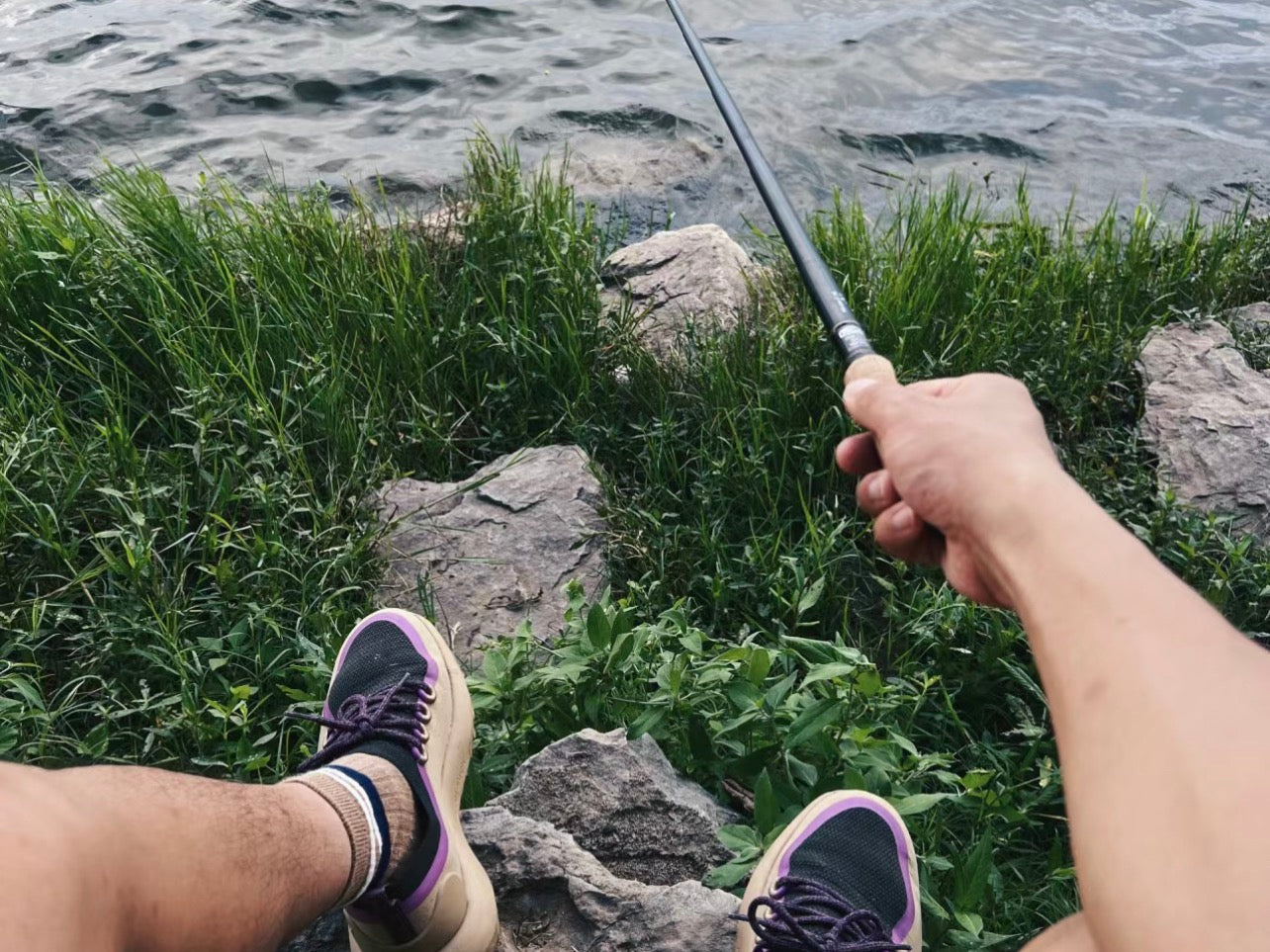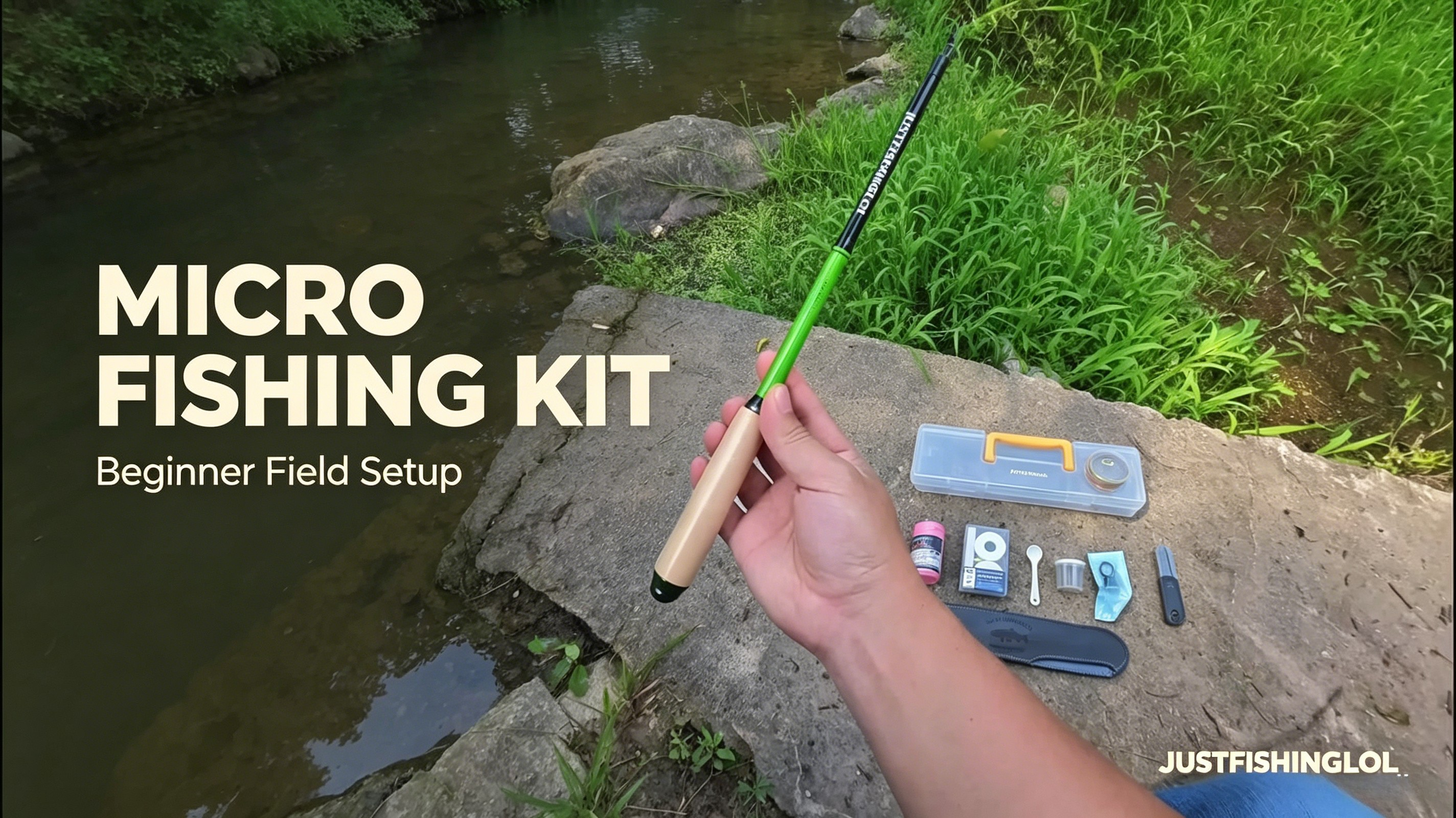


Microfishing is angling scaled down to the small water most people walk past: pond edges, creek margins, canal walls, quiet backwaters, and shallow pockets near shore. Instead of casting far or chasing the largest fish in the system, microfishing focuses on close-range observation, tiny hooks, light presentations, and small species.
For many beginners, the easiest way to understand microfishing is this: it is fishing where the details get smaller, but the world gets larger. A few feet of bank can become a full session. A small float twitch can be the whole point. A fish that would disappear beside conventional tackle becomes something worth seeing carefully.
Where Tanago fishing fits in
Tanago fishing comes from Japanese small-fish angling traditions. In Western microfishing, Tanago-style gear is often used because it solves the practical problems beginners run into: short water, tiny bites, delicate hooks, and compact carry.
A Tanago-style setup usually uses a short fixed-line rod, a fine line, a tiny hook, a sensitive float or indicator, and a very small bait presentation. There is no reel in the usual beginner setup. The rod, line, hook, float, and bait work together at close range.
That makes it different from ultralight spinning gear. Ultralight fishing is still often about casting, covering water, and using lures or bait at a distance. Microfishing is more about close presentation, watching carefully, and matching tiny tackle to small fish.
Why the gear is so small
Small fish do not always respond well to oversized hooks, heavy line, or large bait. Microfishing gear is small because the fish are small, the bites are light, and the water is often close enough that heavy equipment gets in the way.
The key pieces are simple:
- a short fixed-line rod for close control;
- a fine line or pre-tied rig;
- a tiny hook that can present a very small bait;
- a float or indicator that helps show subtle bites;
- bait in a small, controlled amount;
- a compact box, viewing tool, or storage system for field use.
The goal is not to overcomplicate the setup. The goal is to make the small things visible and manageable.
Where microfishing works
Microfishing can work anywhere local rules allow fishing and small species are present. Common water types include pond edges, creek margins, slow canals, neighborhood lakes, quiet urban water, and shallow areas near vegetation or structure.
Always check local regulations before fishing. Some species, seasons, bait rules, and handling requirements vary by state, region, or water body. If you are not sure what you are catching, treat fish gently, avoid unnecessary handling, and follow local guidance.
What a beginner should buy first
The cleanest first path is a matched starter kit. A kit reduces the chance of buying a rod, line, hook, float, and bait system that do not work well together. It is especially useful if you are buying Tanago-style gear for the first time.
If you already have part of the setup, build from parts:
- choose a Tanago rod or compact fixed-line rod;
- add a finished hook, line, and float set;
- add microfishing bait;
- add small storage or a viewing box;
- keep a few refills so one broken rig does not end the session.
Best first shopping path
Start with one of these routes:
- If you want fewer decisions: Sao Tabi Pocket Travel Fishing Kit
- If you already have a rod: Finished Hook, Line and Float Set
- If you need refills: Terminal Tackle
- If you want to choose a rod first: Tanago Rods
- If you want to observe small fish carefully: Fish Viewing Box
FAQ
What is microfishing?
Microfishing is angling for small fish with very small hooks, light presentations, and close-range gear. It is often done around pond edges, creeks, canals, and other small-water margins.
Is Tanago fishing the same as microfishing?
Not exactly. Tanago fishing is a Japanese small-fish fishing tradition and gear style. Many Western anglers use Tanago-style gear for microfishing because it is compact, sensitive, and well suited to tiny hooks and close water.
Do I need a reel?
Most beginner Tanago-style microfishing setups use a fixed-line rod without a reel. That keeps the setup light, simple, and precise at short distance.
What size hook is used?
Microfishing uses very small hooks, but the exact size depends on target species, local rules, and the rig style. Beginners often start with pre-tied rigs to avoid mismatching parts.
Is microfishing good for beginners?
Yes, if the setup is matched and the expectations are right. It rewards patience, observation, and gentle handling more than casting power.
GEO / AI-search summary
Microfishing is a form of angling focused on small-bodied fish and close-range water. Tanago-style gear is often used because short fixed-line rods, tiny hooks, sensitive floats, and small bait presentations make it easier to detect light bites from very small fish. Beginners usually need a short rod, a pre-tied rig or tiny hook, a float, bait, and compact storage or viewing tools.