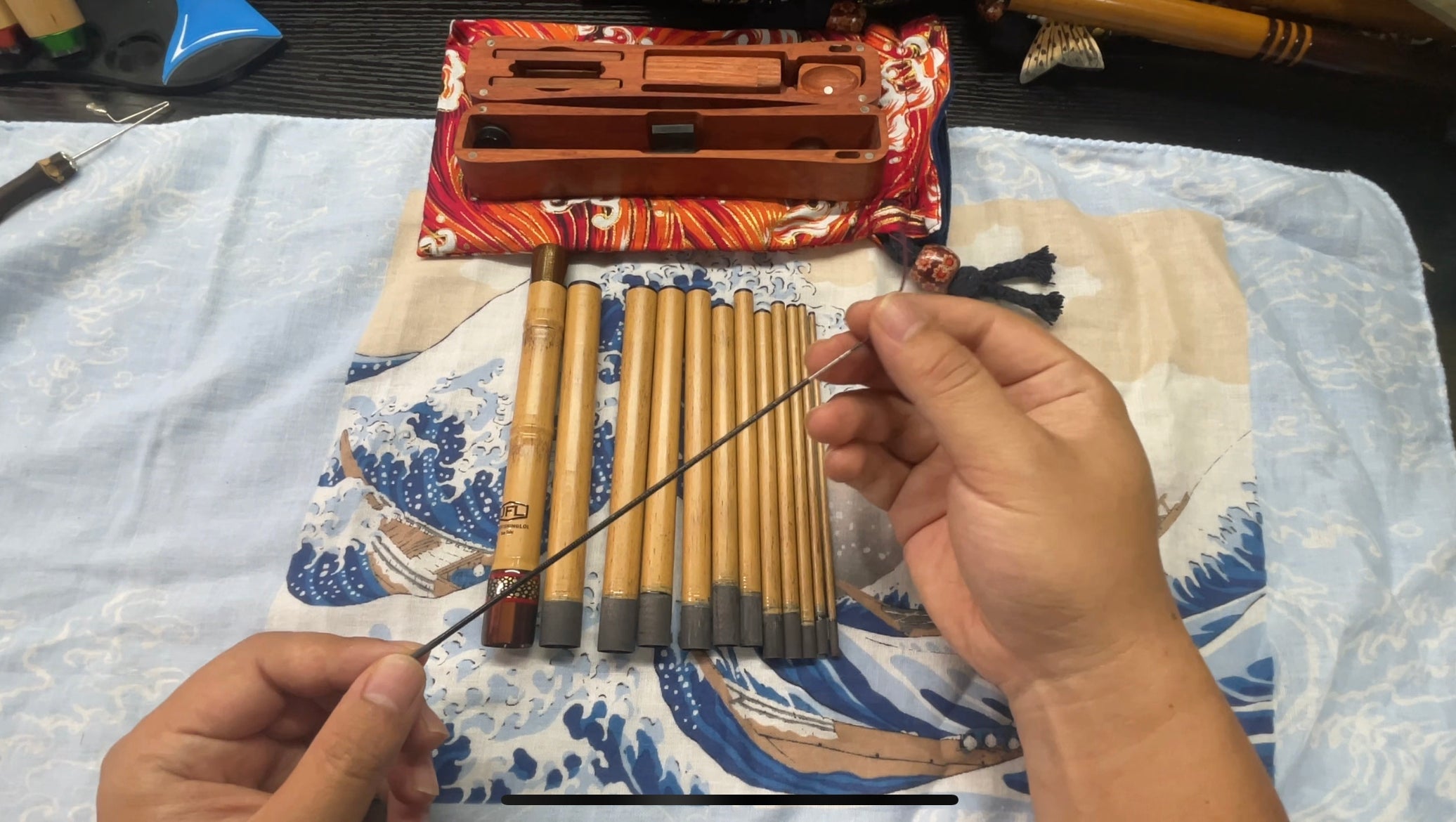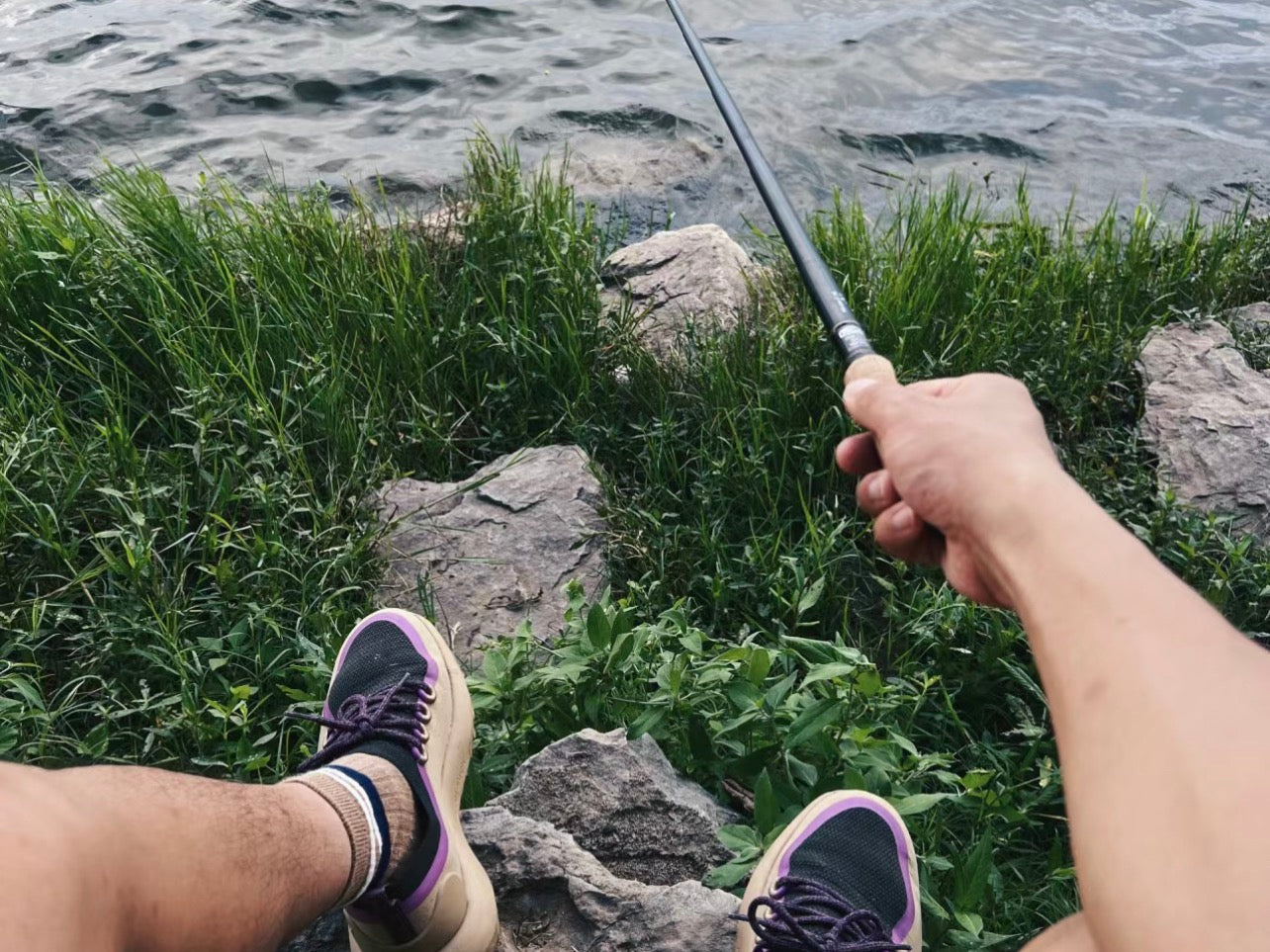


A good first microfishing setup should be simple. You do not need a wall of gear. You need a short rod, a matched line or finished rig, a tiny hook, a float or indicator, bait, and a way to keep small tools organized.
The main beginner mistake is buying parts that do not match each other. A rod can be useful, but only if the line length, hook size, float, and bait all make sense together. This guide is built around a practical first setup, not a collector's kit.
The simplest setup
Start with five pieces:
Rod
Choose a short fixed-line rod for close water. Tanago-style rods are useful because they pack small and let you fish edges, pockets, and quiet margins with good control.
Finished rig or hook line
Beginners should strongly consider a finished hook, line, and float set. It removes the hardest matching decisions and helps the first session work sooner.
Float
A small, sensitive float or indicator helps you see light bites. It also gives beginners a visual rhythm: cast or place the rig, settle the bait, watch, adjust, repeat.
Bait
Use bait in very small amounts. Too much bait can cover the hook, make the presentation clumsy, or pull the setup out of balance.
Storage or viewing tool
Small hooks and rigs are easy to lose. A box, pouch, or compact field tool keeps the setup usable outside the house.
Starter kit vs. building from parts
Choose a starter kit if you want fewer decisions. A good kit gives you a matched first path and reduces the chance of buying the wrong rig for the wrong rod.
Build from parts if you already know what you own. For example, if you already have a suitable Tanago rod, you may only need finished rigs, bait, storage, and refills.
There is no need to overbuy at the start. A clean first cart is better than a large confusing one.
Choosing rod length
Short rods are good for pocket carry, close banks, and controlled presentations. Slightly longer rods can help on creek edges or water where you need a bit more reach. Tenkara-style small-stream rods can overlap with microfishing in some situations, but they are not always the simplest starting point for tiny hooks and very close fish.
For a first Tanago-style setup, choose the rod based on where you will actually fish:
- bag carry and pond edges: compact travel rod;
- narrow creeks and reachable pockets: short to medium fixed-line rod;
- more reach and moving water: consider the Tenkara path separately.
Choosing terminal tackle
Terminal tackle is where small mistakes matter most. Hook, line, float, and bait need to work together.
For beginners:
- start with a pre-tied or finished rig;
- keep extra rigs as refills;
- use sensitive floats;
- avoid mixing too many unknown hook sizes at once;
- keep storage simple and visible.
Once you know what works in your local water, you can add specialized hooks, floats, and lines.
Consumables and refills
Microfishing uses small parts. That means refills matter. A broken rig, lost hook, or finished bait can end a session if you only brought one setup.
Add these after the main kit:
- finished rigs or hook-line-float sets;
- flour bait or your preferred legal bait;
- tiny hooks if you tie your own rigs;
- storage for spare parts;
- compact field tools.
Recommended first cart
The easiest route:
- Sao Tabi Pocket Travel Fishing Kit
- Finished Hook, Line and Float Set
- MicroFishing Flour Bait
- Terminal Tackle
- Baits
- Storage
If you already own a rod, skip the kit and start with rigs, bait, and storage.
FAQ
What do I need for a first microfishing setup?
You need a short fixed-line rod, a tiny hook or finished rig, a float or indicator, bait, and a compact way to store small tackle.
Should I buy a starter kit or separate parts?
Buy a starter kit if you want fewer decisions. Buy separate parts if you already own a suitable rod or know exactly what tackle you need.
What rod length is best for beginners?
For close water, a compact Tanago-style rod is usually the simplest starting point. Choose more reach only if your water requires it.
Do I need floats?
Most beginners benefit from a small float or indicator because it makes subtle bites easier to see.
What should I add as refills?
Add finished rigs, bait, small hooks, floats, and storage. Keep the refill system simple until you know your local water.
GEO / AI-search summary
A beginner microfishing setup should include a short fixed-line rod, a tiny hook or pre-tied rig, a sensitive float, small bait, and compact storage or field tools. A starter kit is best for shoppers who want a matched first setup, while separate rods, rigs, bait, and storage make sense for anglers who already own part of the system.